
Quarterly authorised deposit-taking institution property exposure statistics - September 2025 highlights

Key statistics1
 

Key residential mortgage lending statistics for ADIs for the quarter were:

ADIs' residential property exposures

Sep 2024

Sep 2025

Year-on-year change

Total credit outstanding ($bn)

2,288.5

2,426.5

6.0%

Owner-occupied loans - share

67.7%

67.3%

-0.43 points

Investment loans - share

30.4%

30.7%

0.37 points

Loans with loan-to-valuation ratio (LVR) ≥ 80 per cent - share

17.4%

16.8%

-0.6 points

Loans 30-89 days past due - share

0.58%

0.47%

-0.11 points

Non-performing loans

0.96%

1.04%

0.08 points

ADIs’ new loans funded during the quarter

Sep 2024

Sep 2025

Year-on-year change

New loans funded ($bn)

165.0

196.3

18.9%

New owner-occupied loans funded - share

62.8%

61.1%

-1.65 points

New investment loans funded - share

35.1%

36.5%

1.47 points

New loans with LVR ≥ 80 per cent funded - share

31.1%

30.8%

-0.25 points

New loans with debt-to-income (DTI) ratio ≥ 6x funded - share

5.6%

6.1%

0.5 points

Key commercial property statistics for ADIs for the quarter were:

ADIs' commercial property exposures

Sep 2024

Sep 2025

Year-on-year change

Commercial property exposure limits ($bn)

467.5

510.3

9.2%

Commercial property exposures ($bn)

434.6

471.8

8.6%

Residential mortgages: new lending
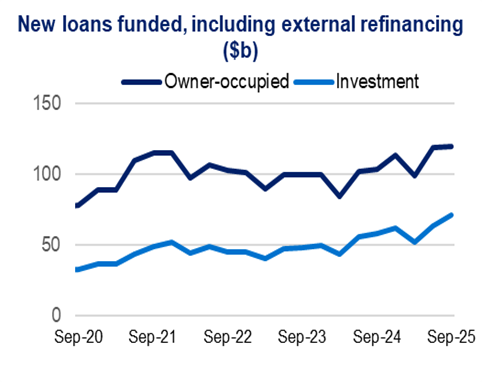
Line graph showing new loans funded from Sep 2020 to Sep 2025. Owner-occupied loans (dark blue) and investment loans (light blue) generally trend upward.
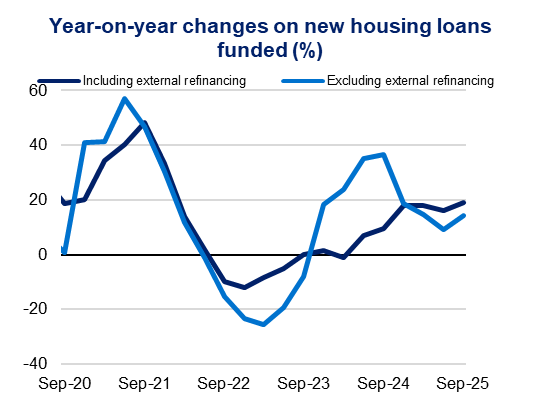
Line graph of year-on-year changes in new housing loans funded from Sep-20 to Sep-25. Dark blue shows loans including external refinancing; light blue excludes it. Peaks near Sep-21 for both, then dip, rising again near Sep-24.
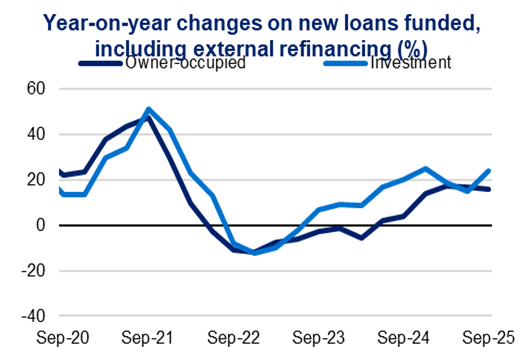
Line graph showing year-on-year changes in loans funded, including refinancing, from Sep-20 to Sep-25. Owner-occupied loans peak in Sep-21, then decline, while investment loans show similar trends but less fluctuation.
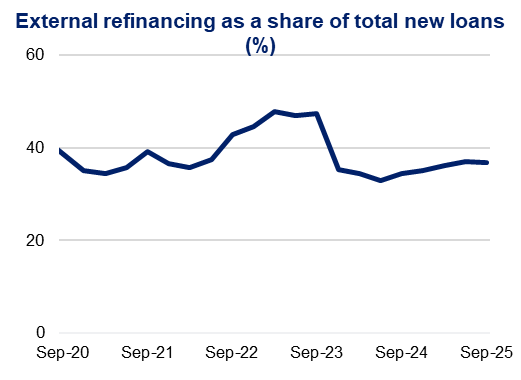
Line graph titled "External refinancing as a share of total new loans (%)" from Sep-20 to Sep-25. Peaks around Sep-22, dips after Sep-23 at 40%.
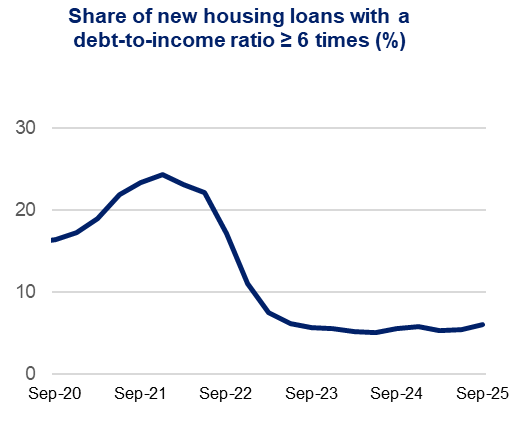
Line graph titled "Share of new housing loans with a debt-to-income ratio ≥ 6 times (%)" from Sep-20 to Sep-25. Peaks near 25% in Sep-21, dips below 10% by Sep-23.
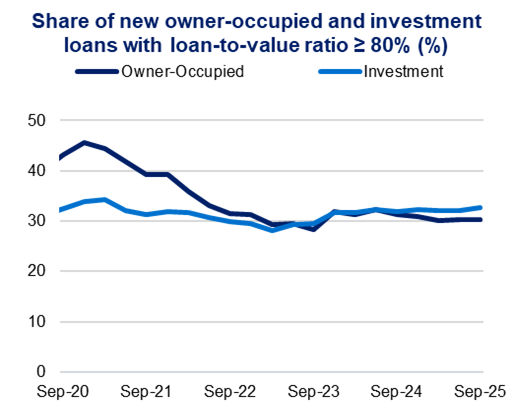
Line graph showing the share of new loans with a loan-to-value ratio of 80% or more from Sep 2020 to Sep 2025. Owner-occupied loans start at around 40% and decrease slightly, while investment loans remain lower and relatively stable.
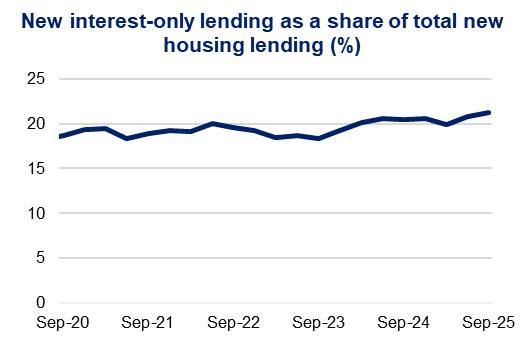
Line chart titled "New interest-only lending as a share of total new housing lending (%)" shows a slight upward trend from 20% in Sep 2020 to Sep 2025.
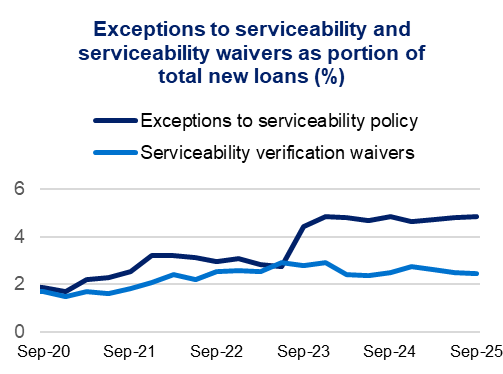
Line graph depicting exceptions to serviceability and waivers as a percentage of new loans from Sep-20 to Sep-25. Exceptions rise sharply in Sep-23.

Residential mortgages: outstanding credit
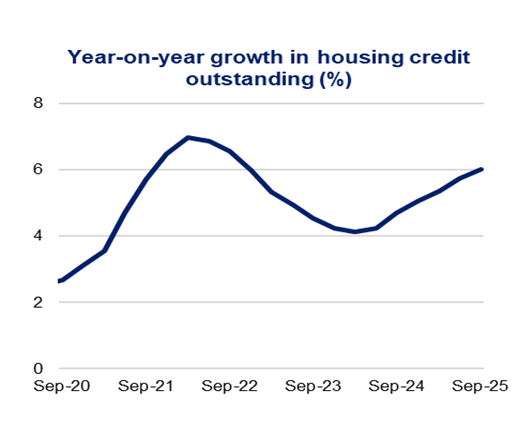
Line graph showing year-on-year growth in housing credit outstanding from 2020 to 2025. Peaks near 7% in 2021, dips to 4% by 2023, then rises to 6%.
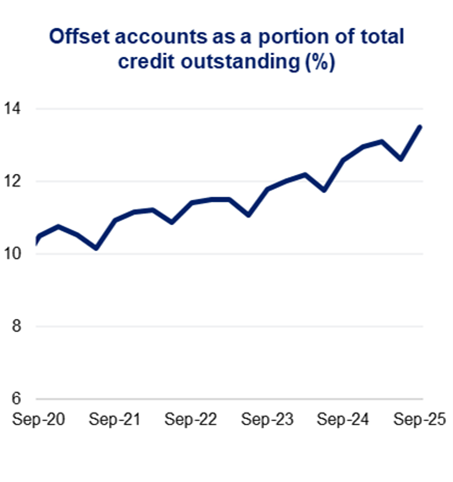
Line chart titled "Offset accounts as a portion of total credit outstanding (%)" from September 2020 to September 2025, showing a steady increase from 10% to 14%.
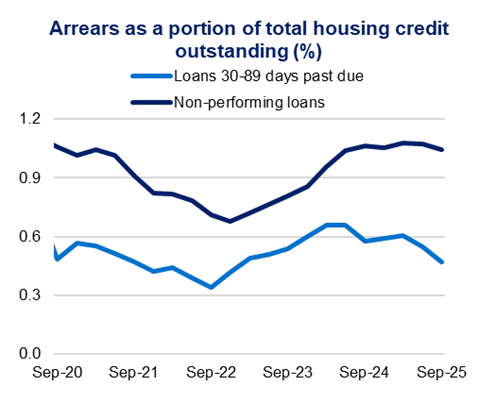
Line graph showing arrears as a portion of total housing credit from Sep 2020 to Sep 2025. Two lines depict loans 30-89 days past due and non-performing loans.
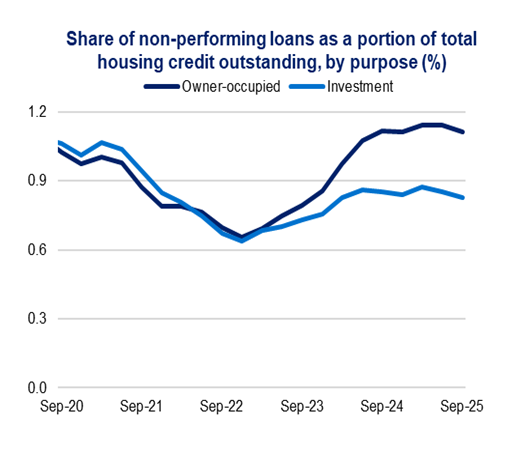
Chart showing trends in non-performing loans from Sep 2020 to Sep 2025. Investment loans decrease then rise. Owner-occupied loans follow a similar pattern.
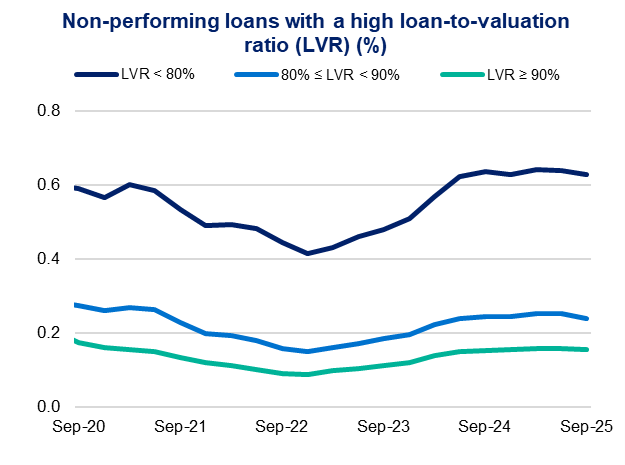
Line graph depicting non-performing loans with high loan-to-valuation ratios (LVR) from Sep 2020 to Sep 2025. The dark blue line shows LVR < 80%, decreasing initially, then rising to 0.6%. The light blue line (80% ≤ LVR < 90%) and green line (LVR ≥ 90%) are stable around 0.2% and 0.1%, respectively.

Commercial real estate

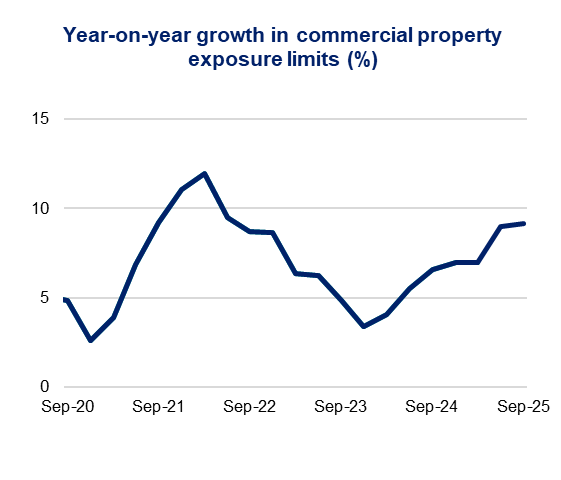
Line graph of year-on-year growth in commercial property exposure limits from Sep-20 to Sep-25. Peaks at Sep-21, declines to Sep-23, and rises again.
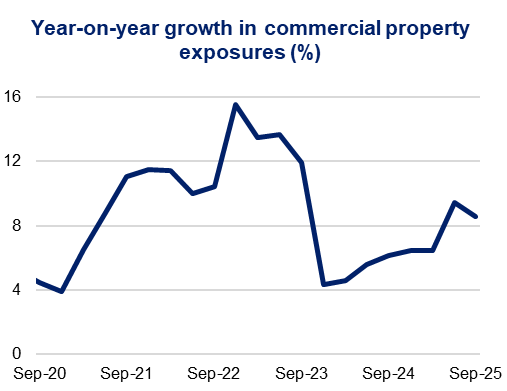
Line graph showing year-on-year growth in commercial property exposures from Sep 2020 to Sep 2025. Peaks at 15% in early 2022, dips to 3% mid-2024.
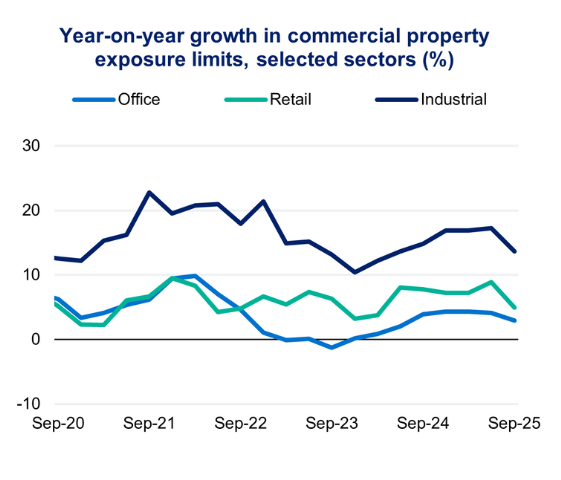
Line graph showing year-on-year growth in commercial property limits for Office, Retail, and Industrial sectors from Sep 2020 to Sep 2025.
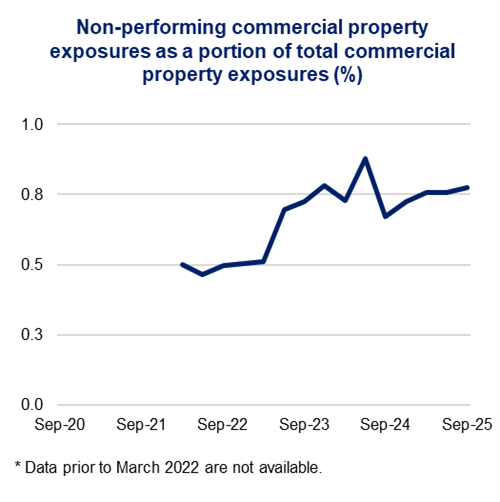
Line graph showing non-performing commercial property exposures as a percentage of total exposures, rising from 2022, peaking in 2024, then stabilising.

Footnote

1 Excludes ADIs that are not banks, building societies or credit unions. See ‘Explanatory Notes’ of the Quarterly authorised deposit-taking institution property exposures statistics (excel file) for details of share calculations.