
Quarterly authorised deposit-taking institution performance statistics - December 2025 highlights

Key statistics1

-December 2024December 2025Year-on-year change
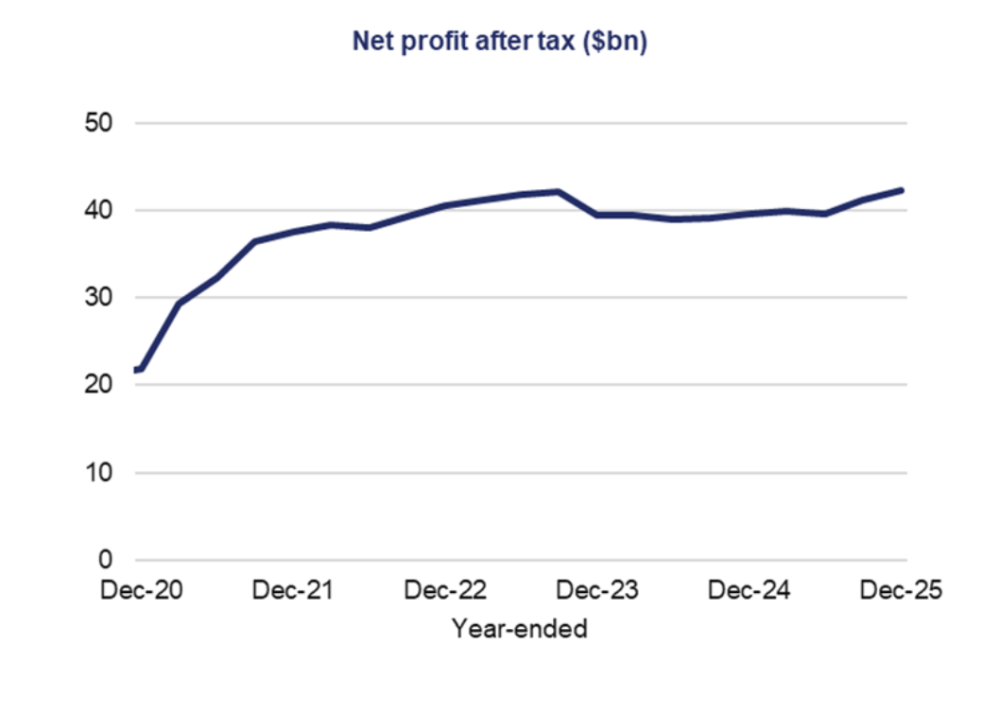
Net profit after tax (year-end) ($bn)39.642.36.6%
Total assets ($bn)6,619.46,828.83.2%
Total capital base ($bn)449.6467.54.0%
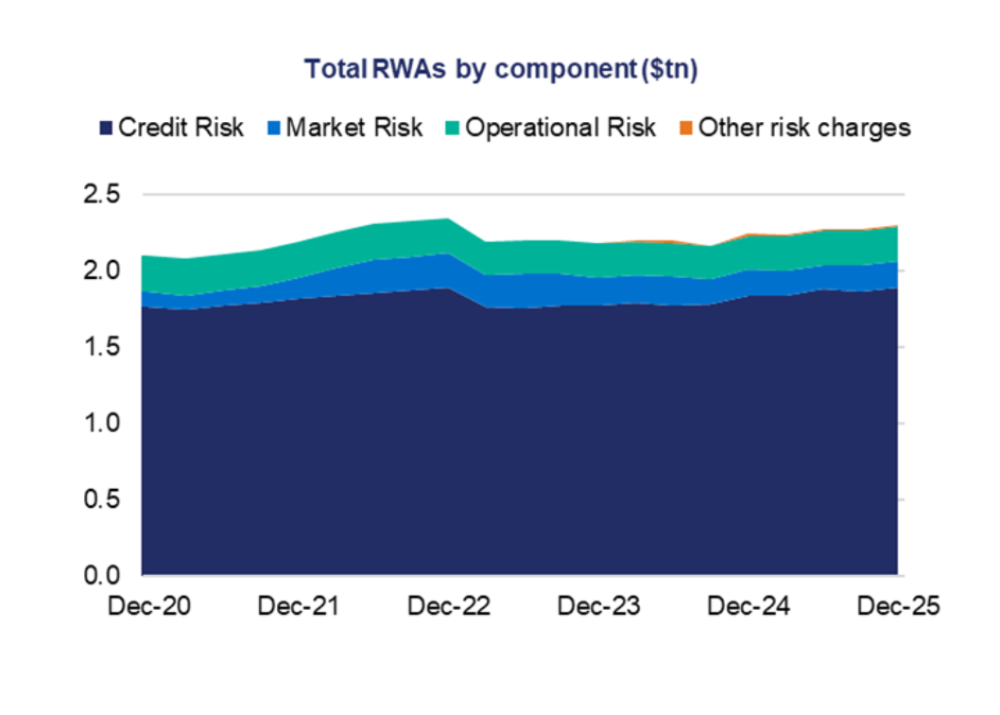
Total risk-weighted assets ($bn)2,237.92,298.82.7%
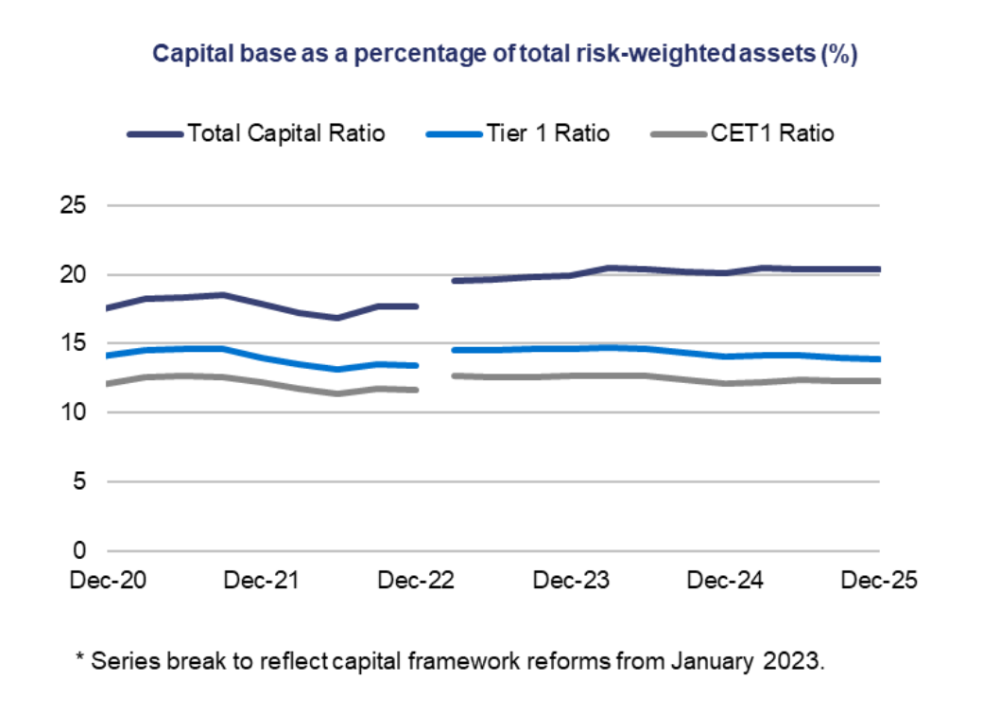
Total capital ratio20.1%20.3%0.25 points
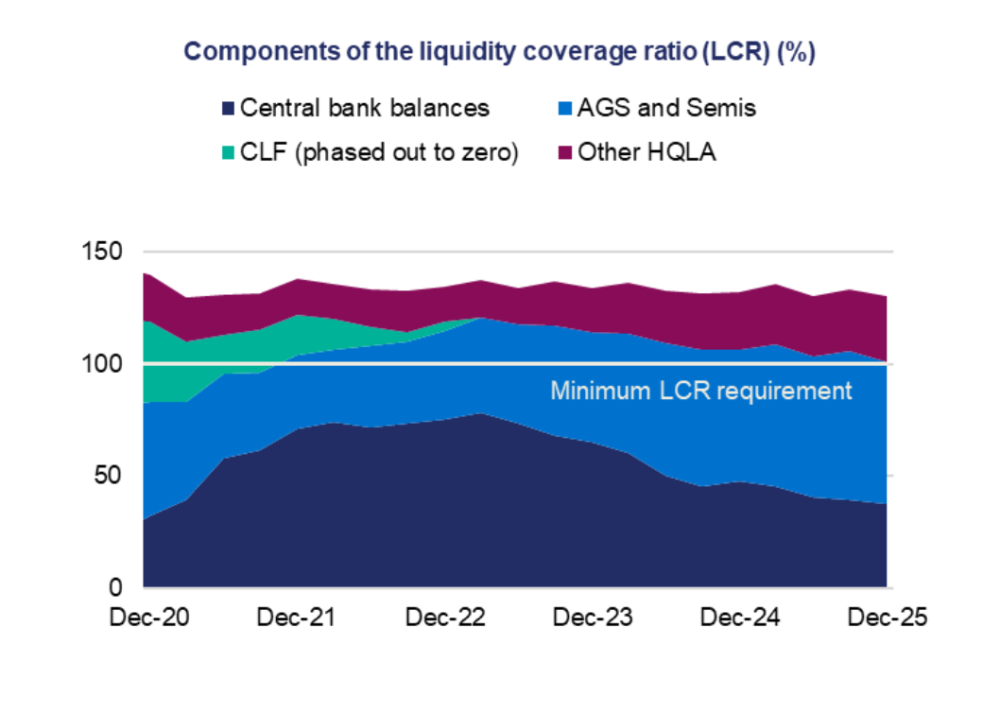
Liquidity coverage ratio132.2%130.2%-2.03 points
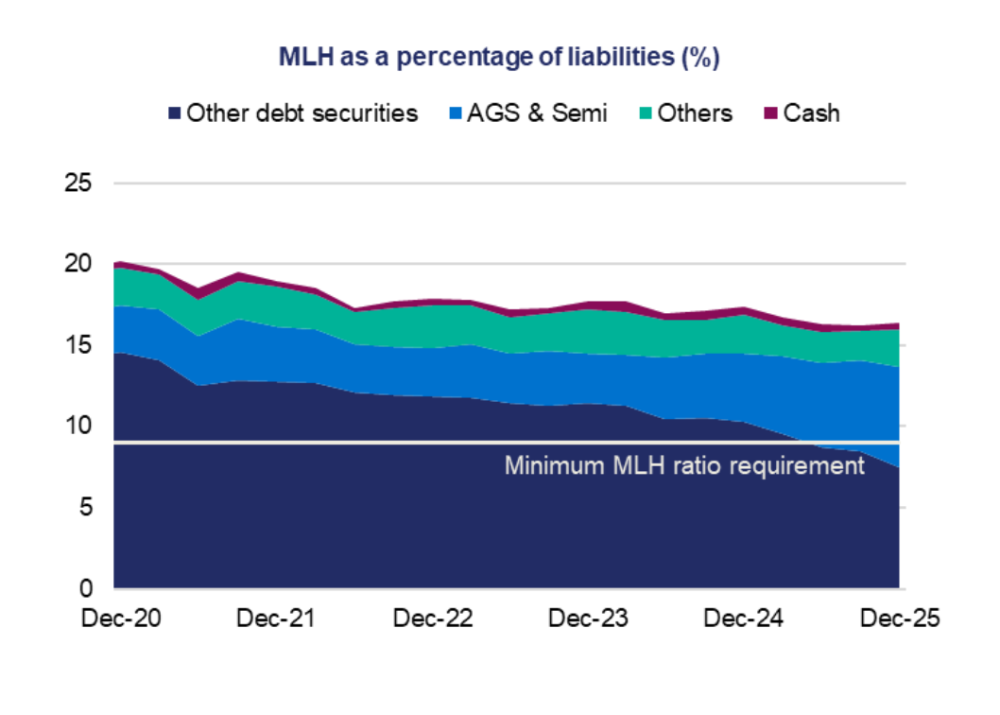
Minimum liquidity holdings ratio17.4%16.4%-0.97 points
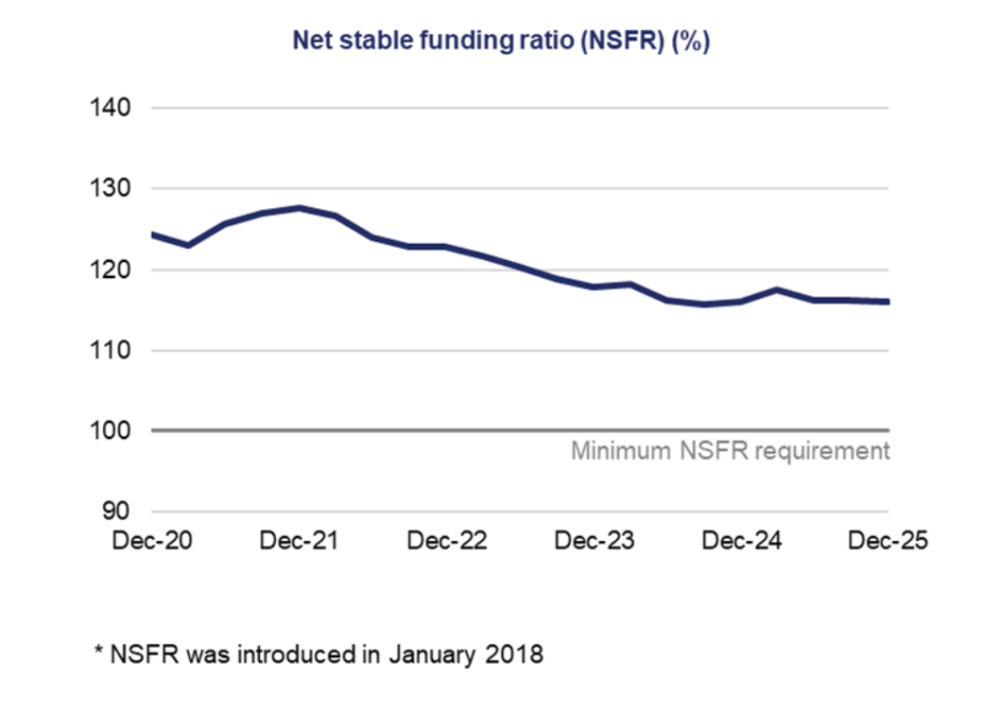
Net stable funding ratio116.0%116.1%0.01 points

Financial performance

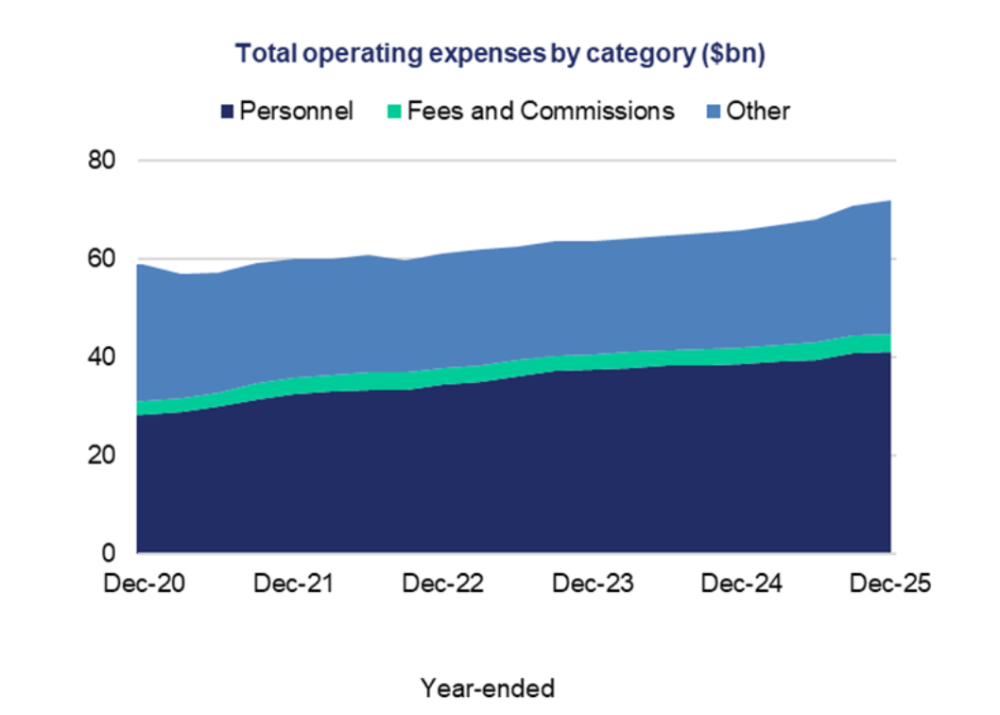
Total operating expenses rise steadily, driven mainly by personnel costs.
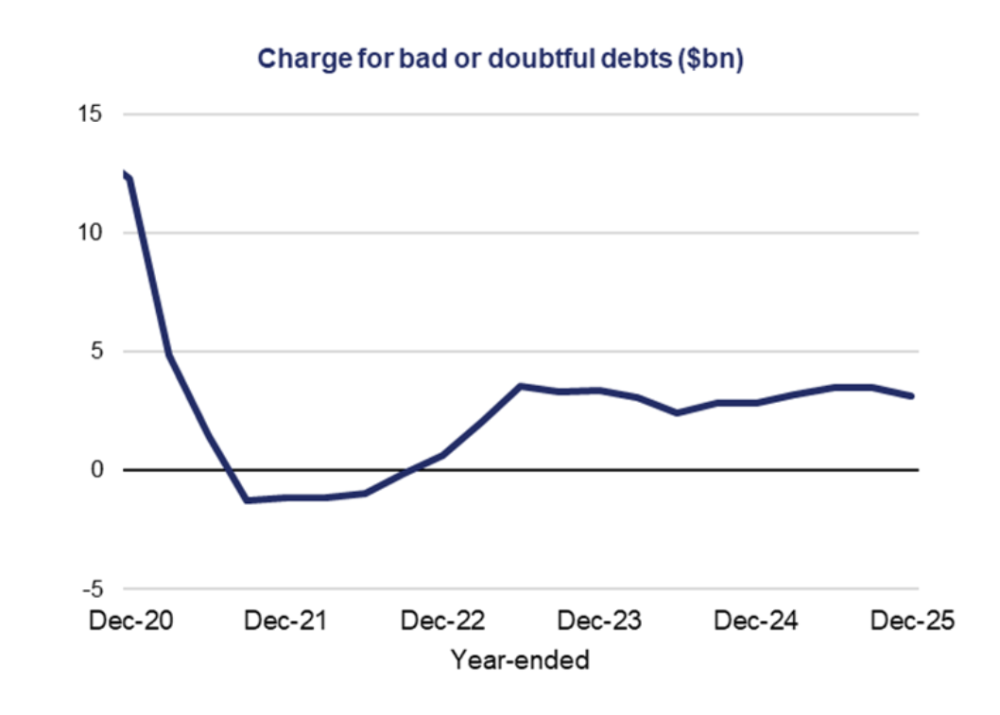
Bad debt charges fall sharply in 2021, then stabilise at low levels.
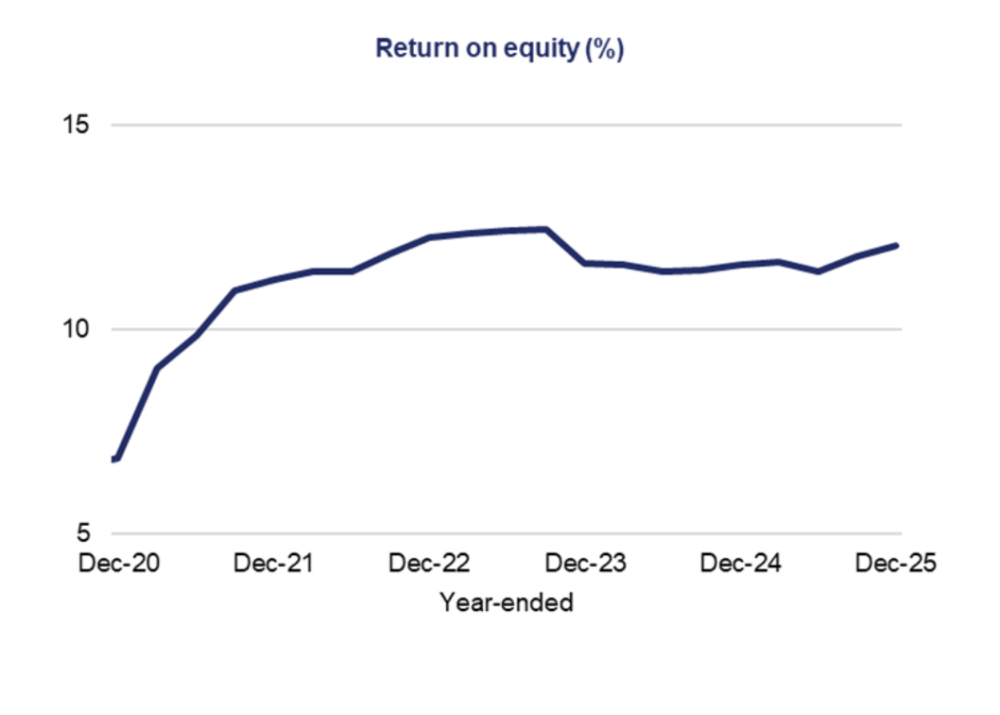
Return on equity rises to 2022, then remains broadly stable.
MLH ratios remain above the minimum requirement throughout.
NSFR declines gradually but stays above the minimum requirement.
Deposits and loans both grow steadily over time.

Asset quality

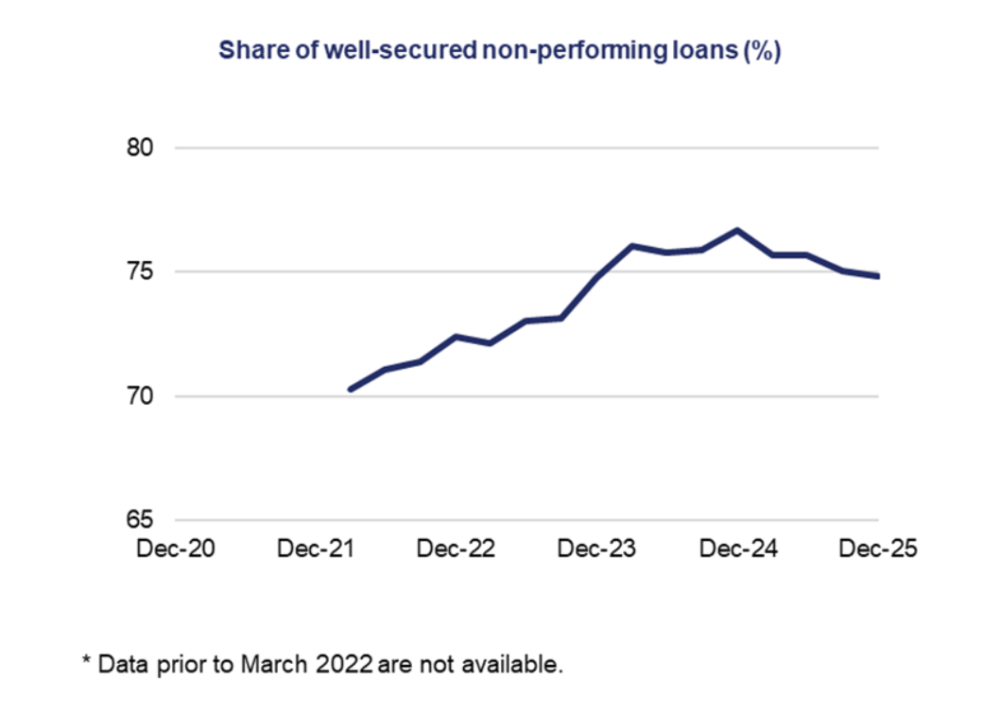
Share of well-secured non-performing loans increases, then eases slightly.
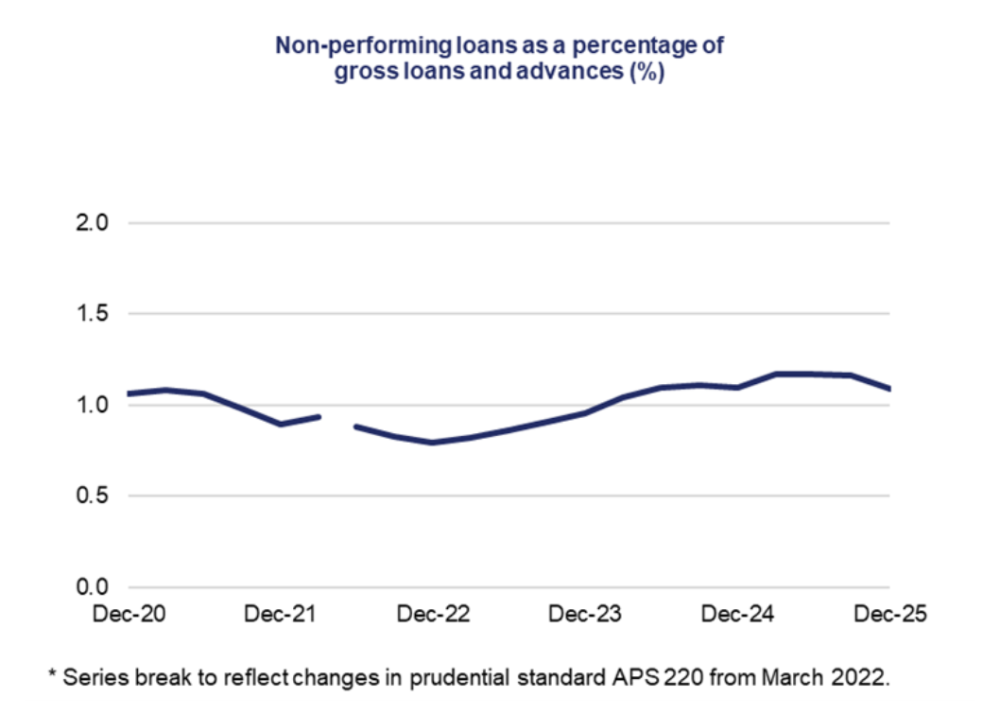
Non-performing loan ratio remains low and broadly stable.

Capital adequacy

Net profit increases overall, with minor fluctuations.
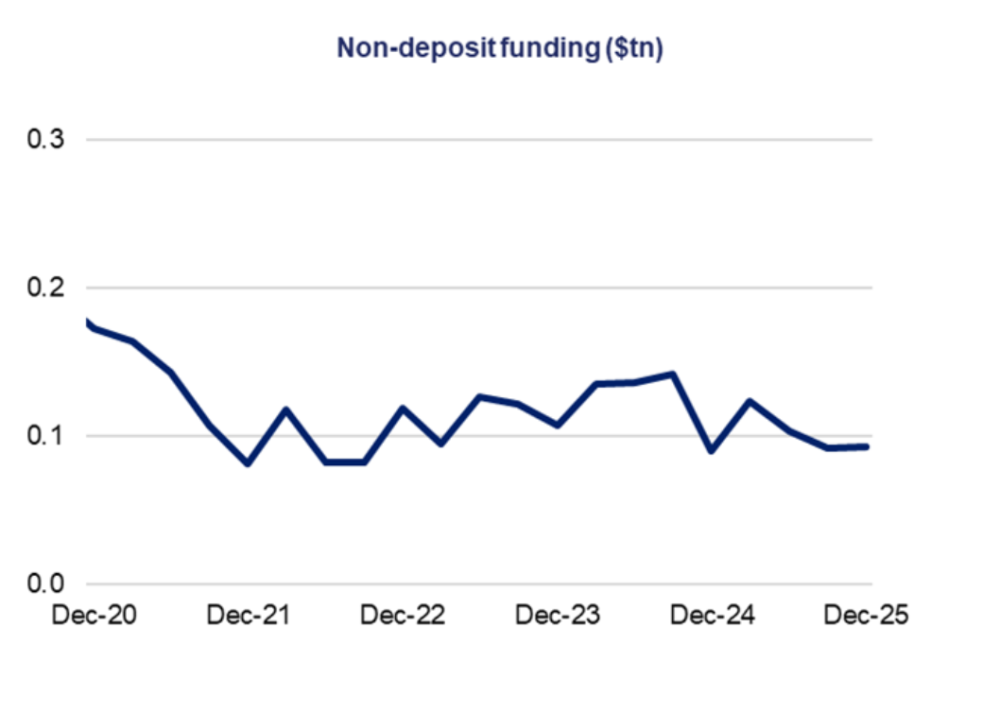
Non-deposit funding declines, then fluctuates at lower levels.
Risk‑weighted assets grow gradually, dominated by credit risk.
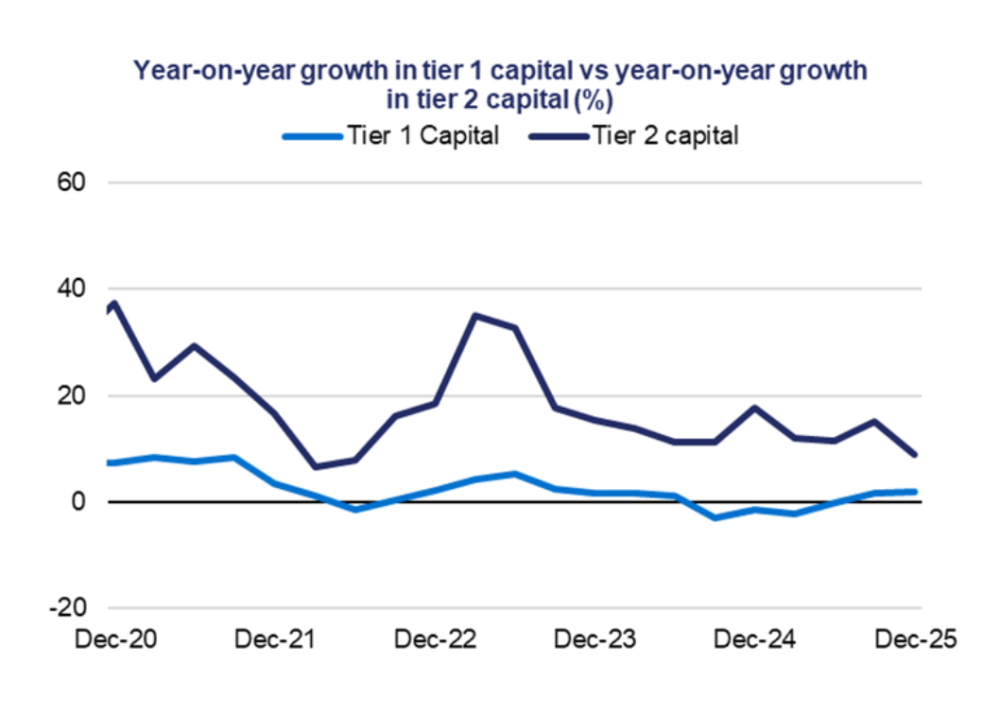
Tier 2 capital growth is more volatile than Tier 1.

Liquidity

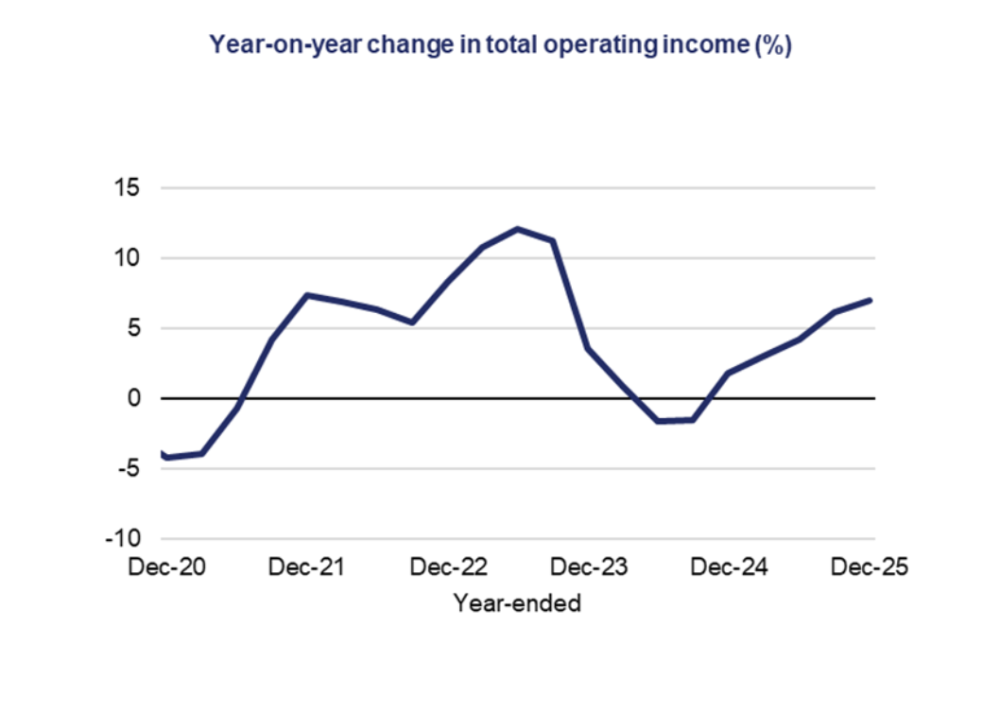
Operating income growth is volatile, dipping in 2023 before recovering.
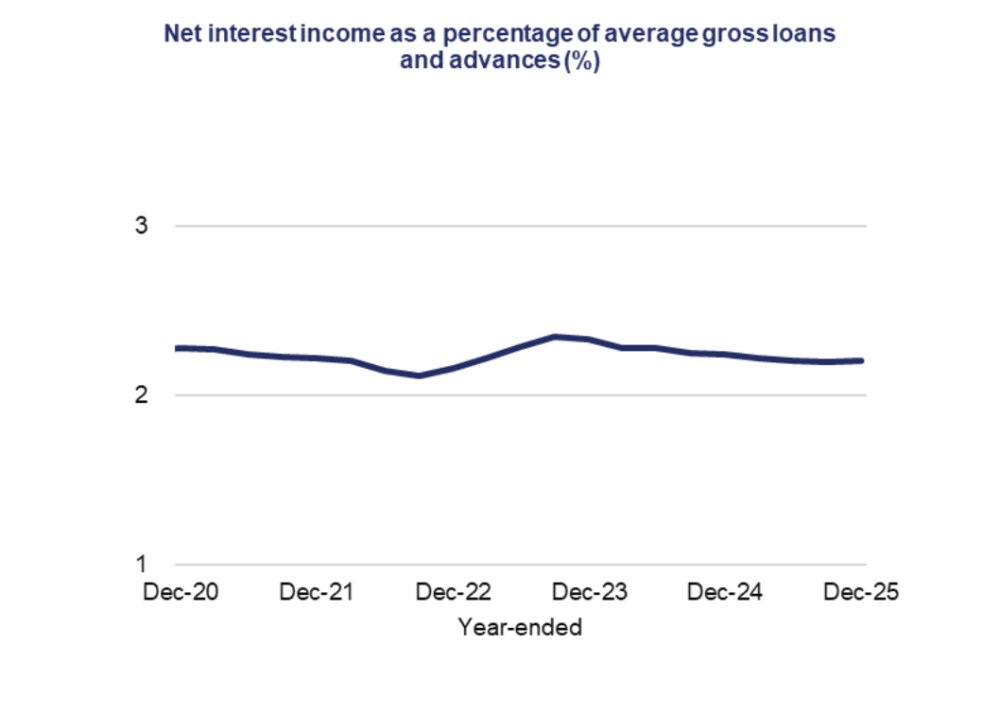
Net interest margin remains broadly stable over time.
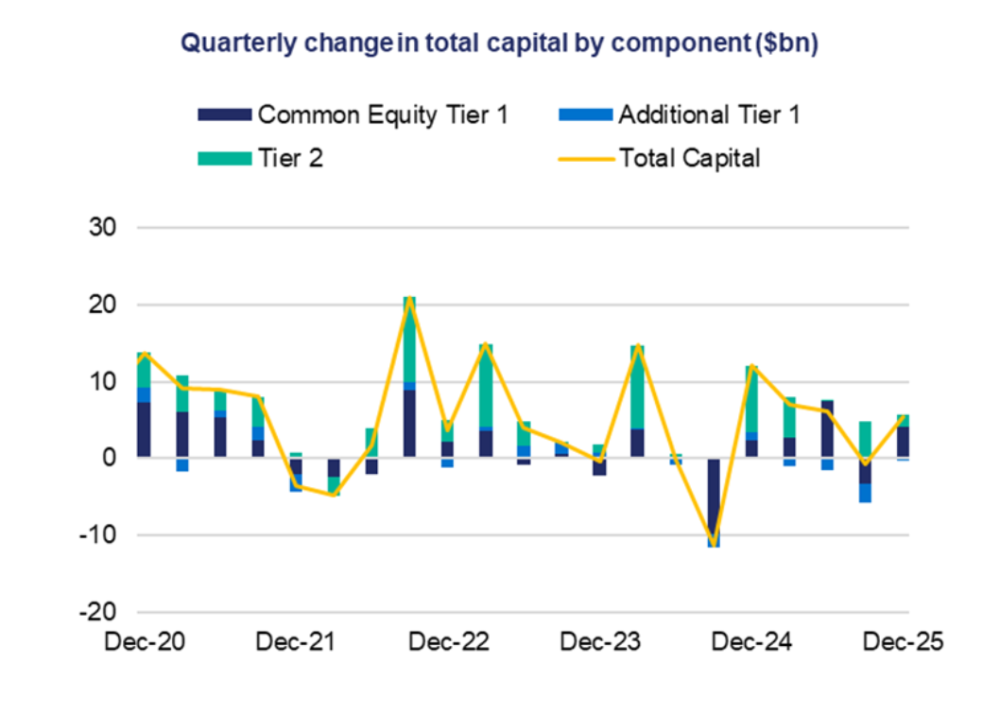
Quarterly capital changes are volatile, with occasional sharp movements.

Financial position 

LCR composition shifts over time but remains above minimum.
Capital ratios remain stable and well above regulatory minimums.