The licensing process
The licensing process is how APRA assesses whether an applicant meets the minimum Licensing Criteria set out in the licensing framework.
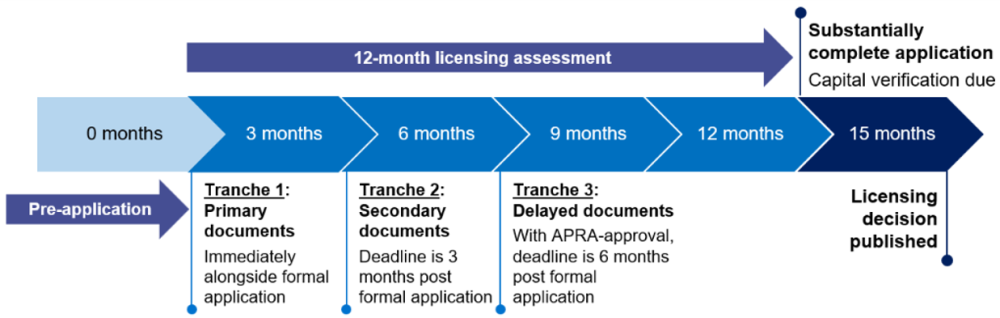
Figure 1. The licensing assessment process
It involves five steps, which are summarised in the following table.
| # | Step | Description |
|---|
| 1 | Pre-application | Preliminary consultation, allowing applicants to understand APRA’s expectations and identify potential issues. |
| 2 | Formal application | Applicant makes a formal application to APRA requesting authority to conduct banking business in Australia and pays the applicable application fee. The fees for licence applications are available on APRA’s website. |
| 3 | Assessment | The licensing assessment is the process for APRA to ensure the applicant meets the Licensing Criteria. This includes a review of the applicant’s business plan, policies and procedures, and on-site meetings. |
| 4 | Substantially complete application | An application is determined to be substantially complete once APRA has sufficient documentation and evidence to assess whether an applicant has demonstrated that it meets the Licensing Criteria. |
| 5 | Licensing decision | APRA grants or refuses the application for a licence and publishes its decision. APRA will aim to make the licensing decision within 90 days of determining an application to be substantially complete. |
Steps in the licensing process
This section provides a step-by-step overview of the five steps in the licensing process. Applicants are encouraged to familiarise themselves with these steps before engaging APRA.
Step 1 – Pre-application
Applicants should engage APRA before submitting a formal application. Pre-application discussions provide an opportunity to discuss the licensing process and APRA’s expectations. Additionally, APRA can better understand the applicant’s business strategy and raise any material issues or concerns. For example, pre-application discussions with an applicant may indicate that it would not be undertaking banking business and does not therefore require an ADI licence, or that its corporate structure must change to satisfy prudential requirements.
APRA’s role as prudential regulator is not to provide commercial advice on an applicant’s business proposal. However, the pre-application process will involve APRA providing initial views on the applicant’s readiness to demonstrate that they meet the Licensing Criteria, how APRA expects to apply proportionality when assessing the application, major application gaps and the applicant’s overall readiness to lodge a formal application.
Before lodging a formal licensing application, APRA expects applicants to be suitably advanced in setting up their business and satisfy the appropriate Board composition requirements.
Applicants may also require licences, approvals or exemptions from other regulatory bodies in order to carry on their proposed business. For example, all ADIs require an Australian Financial Services Licence (AFSL) or an exemption from the Australian Securities and Investments Commission (ASIC).
Applicants are expected to have considered any necessary approvals from other regulatory bodies and be suitably advanced in obtaining them before lodging an ADI application. This includes approvals under the Financial Sector (Shareholdings) Act 1998, where relevant.
It is the applicant’s responsibility to ensure all necessary approvals are obtained. Applicants should be aware that delays in obtaining required approvals may impact APRA’s ability to complete its assessment within the 12-month licensing assessment timeframe.
The pre-application process typically involves two key milestones, summarised below.
| Meeting | Purpose |
|---|
| Initial meeting | - Before holding an initial meeting, APRA requests that applicants prepare and submit to APRA a high-level summary of their business proposition. This includes at a minimum:
- why the applicant needs an ADI licence; and
- business strategy, funding sources, owners and structure, corporate governance, and project plan for the licence application.
|
| Business proposition review and feedback | - Following the initial meeting, APRA will provide a written response to the applicant. Depending on APRA’s preliminary assessment, this may include feedback on the applicant’s business proposition and a request for a developed business plan that incorporates that feedback or may outline material issues or concerns with the proposed business strategy that would need to be addressed before the proposal progresses.
- APRA will provide high-level feedback on the developed business plan. This may include requests for further information to support APRA’s assessment, either before the applicant submits a formal licensing application or as part of the application process.
- APRA expects applicants to have fully developed their business plan and addressed APRA’s feedback prior to submitting a formal licensing application.
- A further meeting may be arranged to discuss business plan feedback, if required.
|
Step 2 – Formal application
After addressing feedback from the pre-application process, applicants should be ready to lodge a formal application. Applications should be made to APRA in writing with the necessary information and supporting documents.
APRA expects that documents provided in the application process should be final and approved by the relevant management and/or governance body.
When providing information to APRA, applicants should note that section 137.1 of the Criminal Code Act 1995 makes it an offence to give false or misleading information to a Commonwealth entity or to a person who is exercising powers or performing functions under, or in connection with, a law of the Commonwealth, or to omit any matter or thing without which the information is misleading. The penalty for this offence is 12 months imprisonment.
External advisors
Applicants may use external advisors for support in preparing their supporting information. Where applicants engage external consultants, APRA expects that the applicant reviews and understands the information provided by the consultants to ensure it accurately reflects the applicant’s strategy, business mix, risk profile, size and complexity. An applicant is ultimately responsible for how its frameworks operate and how risk is managed within its organisational structure and the information provided to APRA. APRA will test with an applicant, through discussions and onsite visits, how its frameworks will be implemented and used by the business.
Document submission
APRA uses a secure document portal for submission of applications and supporting material. Applicants must provide APRA with the details of the individuals who will be responsible for submitting the application. Access to the secure document portal will be arranged for the selected individuals representing the applicant.
Applicants must advise APRA as soon as possible if there are changes to information provided as part of the licensing application, noting applicants have 12 months to satisfy the ADI Licensing Criteria.
Each policy, procedure or other document should be submitted as a separate file, with a clear numbering system and document title to facilitate navigation of the documents. Where minimum supporting information is contained within another document its location should be clearly stated. APRA does not require applicants to submit hard copy documents.
While APRA will treat an applicant’s information in confidence, the information is not covered by the secrecy provisions in section 56 of the Australian Prudential Regulation Authority Act 1998 and could be subject to a Freedom of Information request. Applicants may therefore wish to submit all their documents to APRA as “commercial in confidence”.
Application fees
All applicants are required to pay an application fee prior to APRA commencing its formal assessment of their application. APRA will provide applicants with an invoice for the application fee once APRA has received the formal application.
The fees for licence applications are available on APRA’s website. Application fees are reviewed on a regular basis. APRA’s application fees, along with other charges and levies, are published in the annual Cost Recovery Implementation Statement.
In instances where an applicant’s organisational structure involves a holding company, APRA may require that the ADI have an authorised Non-operating Holding Company (NOHC). An authorised NOHC is subject to a licensing assessment and may incur a separate application fee.
All application fees are non-refundable regardless of the outcome of the application.
APRA will issue applicants with an invoice for the application fee and the account details to make the Electronic Funds Transfer (EFT). To facilitate this, applicants should provide APRA with the name of the company (the applicant), the applicant’s ABN and relevant contact details (name and position of contact, applicant’s address).
Withdrawing an application
An applicant may withdraw its application at any time. Withdrawal requests must be submitted to APRA in writing and signed by two senior officers of the applicant. APRA will not publish its licensing decision on a withdrawn application.
Withdrawal of an application does not prejudice any future applications the entity may make, given new applicants will, in most instances, be treated as a new application. However, the application fee is non-refundable so any subsequent application would be required to be submitted with the applicable fee.
Other regulators
Applicants will likely need to separately apply for licences or approvals for other non-APRA regulated activities to carry on their proposed business. For example, all ADIs require an Australian Financial Services Licence (AFSL) or an exemption from the Australian Securities and Investments Commission (ASIC). It is the applicant’s responsibility to ensure it applies for such licences or approvals.
APRA suggests that these are submitted to the respective regulatory body prior to the ADI application. APRA will communicate directly with ASIC, as well as other regulatory bodies such as AUSTRAC regarding the application.
Ownership of ADIs and their holding companies is governed by the Financial Sector (Shareholdings) Act 1998 (FSSA) which limits the control of a person, or group of associates, over the voting power in an ADI’s shares. A person or group who holds that voting power in excess of the relevant FSSA limit will need to apply to the Treasurer (or APRA, under a delegation from the Treasurer) for approval under the FSSA. This application should be submitted prior to the ADI licence application. It is the person’s responsibility to ensure they have the correct approvals under the FSSA and any other relevant legislation. APRA recommends that shareholders and any other persons with a controlling interest in an applicant should seek independent legal advice in this regard.
Use of restricted words and expressions
It is important that the general public has confidence about whether or not they are dealing with an authorised bank due to the trusted role banks hold in the community. As such, a financial business (other than an ADI) must obtain consent from APRA before using a restricted word or expression.
Applicants can start the licensing process with their existing company name (e.g. ‘Applicant Ltd’) and request approval from APRA to reserve with ASIC a company name containing a restricted term (e.g. ‘Applicant Bank Ltd’). Applications for consent to reserve a company name containing a restricted word or expression should only be made once a formal application for an ADI licence has been made to APRA and the appropriate licensing application fee paid.
APRA understands that applicants, especially start-ups, may need to approach investors and start marketing their business ahead of being granted a licence, which can be difficult to do when the applicant is not permitted to use restricted terms. APRA will generally not object to applicants making certain factual statements, which use restricted terms, once an ADI application is submitted and the relevant fee paid, provided the statements are not misleading and prominently disclose that the institution has not yet been granted an ADI licence.
Where APRA becomes aware of an applicant or potential applicant making misleading statements using restricted terms (e.g. on its website or social media), APRA may seek an order under section 65A of the Banking Act restraining the making of such statements and requiring other corrective action. Misleading or inappropriate use of restricted terms will be looked at unfavourably by APRA when assessing a licence application.
Applicants can check their proposed use of restricted terms with APRA if they are unsure whether the use would be misleading. While some potential applicants may not yet be carrying on a financial business, they should follow these Guidelines in marketing their business or dealing with investors to avoid breaching section 66 of the Banking Act or other laws.
Step 3 – Assessment
APRA’s assessment of a licence application will focus primarily on whether the applicant demonstrates that it meets the Licensing Criteria. Applicants are encouraged to utilise the ADI Licensing Criteria and the ADI Licensing Guidelines to ensure their application is adequate.
Proposed new ADIs differ widely in their scale, complexity and potential impact on the financial system. Consistent with APRA’s risk-based approach, APRA’s expectations of how an applicant demonstrates that it meets the Licensing Criteria will be proportionate to its strategy, business mix, risk profile, size and complexity.
APRA breaks down assessment of the application into three distinct components:
- Formal application – This is where an applicant makes their formal application under section 9 of the Banking Act for authority to conduct banking business in Australia. If an applicant has not finalised some of the expected documentation when it submits its formal application, it should indicate when the finalised supporting information will be provided, noting applicants have 12 months from lodging their formal application and paying the application fee to demonstrate that they meet the ADI Licensing Criteria.
- Revised or additional information – APRA may require resubmissions and request additional material as it reviews a licensing application.
- Substantially complete application – Applications are substantially complete when APRA has sufficient documentation and evidence to determine whether an applicant has demonstrated that it meets the Licensing Criteria.
Once a formal application is received, APRA will review the information provided in the application and begin assessing the application against the Licensing Criteria. APRA will provide feedback on the application and may request additional information, hold meetings with the applicant and review aspects of the applicant’s operations onsite.
If an applicant makes material changes to its proposed business (for example, changes to its strategy, Board, management, or legal structure) after APRA has determined the application to be substantially complete, APRA will assess the impact of the changes on the entity’s application. Applicants are expected to notify APRA if this occurs, noting they have 12 months to demonstrate that they meet the ADI Licensing Criteria and any material changes during the application process could impact the licensing timeframe.
Timeframe
When an applicant has lodged a formal licensing application and paid the licensing application fee, the 12-month timeframe for the licensing assessment begins. Applicants are expected to fund themselves throughout the licensing process. APRA cannot ‘fast-track’ applications where applicants have insufficient funds.
Document submission, review and feedback
APRA expects most of the required documentation to be submitted with the formal application. APRA allows flexibility for some material documentation to be submitted up to 3 months after application lodgement. Where earlier submission is not feasible, and with APRA’s approval, applicants may submit a limited number of documents within six months of lodging the application. Further detail around required documentation is provided in the Licensing Guidelines.
If an applicant does not provide the required documentation within the timeframes provided by APRA, this restricts APRA’s ability to conduct the licensing assessment, and APRA may refuse the application.
Document review and feedback by APRA is an iterative process that ensures submitted documents are of sufficient quality to demonstrate that the applicant meets the ADI Licensing Criteria, and comply with the Banking Act and the Financial Sector (Collection of Data) Act 2001 (FSCODA). APRA will typically not progress to onsite reviews or Board meetings until a material proportion of the licence application has been assessed.
Information Technology (IT) resilience meetings
The IT resilience meetings assess the applicant’s IT infrastructure, IT security tools and controls, systems and timescales for implementation and testing, outsourcing arrangements and business continuity plans.
APRA will also determine whether individuals responsible for the management of the applicant’s IT risk have the necessary skills, knowledge and expertise. IT resilience meetings are dependent on the applicant’s IT system build. Applicants will likely meet with APRA to discuss IT resilience during the assessment process, with further meetings scheduled as necessary for APRA to gain assurance. Additional meetings are normally required where an applicant has unique or complex IT systems.
Board and management meetings
APRA will meet both individually and collectively with members of management and the Board (including independent, non-executive directors). APRA will assess whether management and the Board have the necessary skills and experience to prudently conduct banking business. APRA typically schedules the final meeting with the applicant’s Board towards the end of the licensing process to discuss any outstanding issues.
APRA will visit the applicant’s premises to assess resources and the applicant’s ability to operationalise. The visit will typically be scheduled in conjunction with the final meeting with the Board.
Following the final meeting with the Board, the applicant must submit a declaration of their current financial position. The declaration must include:
- the applicant’s most recent Common Equity Tier 1 capital position;
- the estimated monthly capital burn rate until six months post licensing;
- an estimate of how long initial regulatory capital is expected to remain above minimum requirements without additional capital raises; and
- the amount and timing of any expected capital raises up to and immediately after licensing.
Step 4 – Substantially complete application
An application is determined to be substantially complete once APRA has sufficient documentation and evidence to assess whether an applicant has demonstrated that it meets the Licensing Criteria.
After determining an application is substantially complete, APRA will then seek to finalise the licensing decision as soon as practicable and aims to make the decision within 90 days. Determination by APRA that an application is substantially complete does not prevent APRA requesting any further information it requires to make a final licensing decision.
Step 5 – Licensing decision
The assessment team prepares a recommendation of the licence application outcome for a senior APRA official not involved in the application process. Licensing application outcomes, including both granting and refusing to grant a licence, will be published by APRA on its website.
In announcing the decisions to grant or refuse an ADI licence, APRA will only publish the decision outcome and not publish its reasons for refusing an application. Any announcements would be consistent with APRA’s existing confidentiality practices and the relevant protections under the Freedom of Information Act 1982 and Australian Prudential Regulation Authority Act 1998. APRA will not publish information about an application that may be commercially sensitive or confidential in any way. However, publishing outcomes is critical to ensure transparency and integrity of the licensing assessment process. APRA will not publish information about applications that are withdrawn before a licensing decision is made.
A decision to refuse an application under section 9 of the Banking Act is subject to Part VI of the Banking Act – Reconsideration and Review of decisions. Under Part VI a person who is dissatisfied with a decision may request that APRA reconsider the decision. The request for APRA to reconsider must be made within 21 days of the date the person was notified of the decision and must set out the reasons for the request.
From receipt of a request to review a decision APRA has 21 days to confirm, vary or revoke its decision. If APRA does not confirm, vary or revoke its decision within this timeframe then its decision is taken to be confirmed.
If the applicant is dissatisfied with the outcome of APRA’s review, they may make an application to the Administrative Review Tribunal for a review of APRA’s decision.
Contacting APRA
Prospective applicants are strongly encouraged to familiarise themselves with APRA’s ADI Licensing framework and prudential framework before engaging APRA. Doing so will help applicants to demonstrate that they meet the Licensing Criteria and support a more efficient assessment process within the 12-month licensing timeframe.
Once an applicant has determined that it requires an ADI licence for its business, the applicant should then prepare information on its business strategy, funding sources, owners and structure, corporate governance, and project plan for the licence application.
An applicant should then engage APRA to begin the pre-application process by contacting APRA’s licensing team at licensing@apra.gov.au.